
The hardest part of the evening isn't the hour before bed. It's the transition — the gap between doing and not-doing, between the day's momentum and the night's stillness.
Most people try to bridge that gap with a long routine. Long routines are great on paper and rare in practice. By the time you need them, you're too tired to do them.
A bridge, not a routine
A wind-down doesn't have to be elaborate. It has to be reliable. Sixty seconds, the same way, every night. The consistency matters more than the content.
The sixty seconds
- Stand still. Wherever you are when you decide the day is done — the kitchen, the hallway, the bedroom doorway — stop. Don't sit yet.
- Three slow breaths. In for four, out for six. The longer exhale is the part that actually shifts your nervous system. Don't count perfectly. Just make the exhale longer than the inhale.
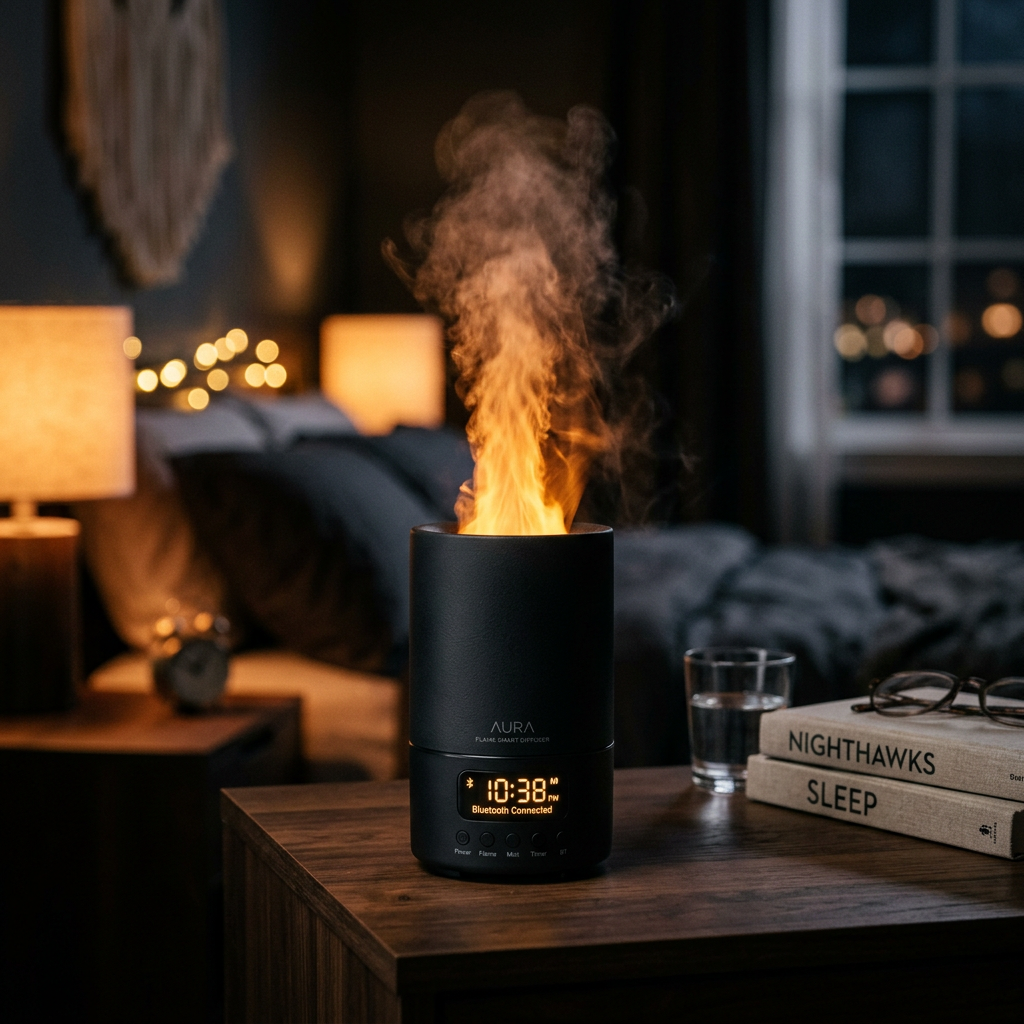
- Change one thing in the room. Turn off the overhead light. Light the diffuser. Put the phone in a drawer. One small physical change that says the day is over.
That's it. Sixty seconds. The rest of the evening unfolds from there.
Why it works
The breath isn't magic. The point is the pause — the deliberate gap between the day's last task and the night's first moment of rest. Most evenings are lost because there is no gap. The day bleeds straight into the night, and the night never really begins.
Three breaths is enough to make the gap. After that, the room — and the rest — takes over.